How to Control Noise in Data Centers: Key Design Strategies
Noise control is a crucial part of data center design. Inside data centers, there’s a combination of power density, switching equipment, and high-frequency data lines in a small footprint. In other words, it’s a perfect recipe for electromagnetic interference (EMI).
Unlike a factory floor where more spread-out equipment may cause a reading drift on one instrumentation loop, EMI in data centers can be extremely threatening. It can impact signal integrity across racks of servers, storage, and networking gear, causing data corruption, latency, and significant downtime. Here’s what you need to know to ensure your data center design includes proper shielding.
Key Takeaways
- Data centers are an EMI-intensive environment with a combination of power density, switching equipment, and high-frequency data lines in a small footprint. Centers are prone to interference with high stakes, such as data corruption, latency, and downtime.
- Shielding choice should be made deliberately. Foil for fixed, high frequency structured cable; braided for cable that flexes and gets reconfigured; combination for zone near EMI sources or on backbone runs.
- A mixed-shielding approach by risk zone is usually more cost effective than using one shielding type facility-wide.
- Physical layout and grounding are also crucial for addressing EMI. Separation distance, 90-degree crossings, dedicated cable trays, and a well-bonded ground reference per zone are all crucial considerations.
- Plan shielding into the project from the beginning—it’s much easier than trying to retrofit.
What Causes Noise in Data Center Environments?
When you consider data center “noise,” the issue isn’t just sound; it’s the EMI that can impact all of your equipment. Power distribution units, dense switching gear, HVAC and cooling equipment, as well as high-density fiber and copper runs can all contribute to the interference.
There are noise sources that are very specific to data centers, and choosing the right shielding type and planning it into your project setup from the start is much easier than troubleshooting and retrofitting after the fact.
Power distribution equipment such as PDUs, UPS systems, and transformers can all generate electromagnetic fields. It’s particularly an issue during switching events. Data centers also rely on VFDs and cooling infrastructure—precision cooling systems are crucial. Many of the cooling systems use variable frequency drives like chillers and CRAC/CRAH units. These are also a major source of EMI.
When networking equipment and power supplies are switching at high frequencies, packed in a center with high density—racks close together, cable trays stacked…the noise sources are physically much closer to data lines compared to a typical industrial layout.
Crosstalk between adjacent cable runs is inevitable, especially when you have high-density cable trays and bundling. Copper data cables often run parallel to power cables (or to each other) over long distances, which increases your capacitive and inductive coupling risks.
Having multiple ground reference points across a large facility can cause ground loops that also introduce electronic noise. This is especially an issue in multi-room or multi-floor data centers. If ground points aren’t properly bonded, interference occurs.
Data centers combine high noise-source density with high-sensitivity infrastructure, in the same footprint. In other words, EMI is going to occur without careful design planning for the layout and proper shielding practices for cables. Planning is critical here—even more so than typical industrial applications. 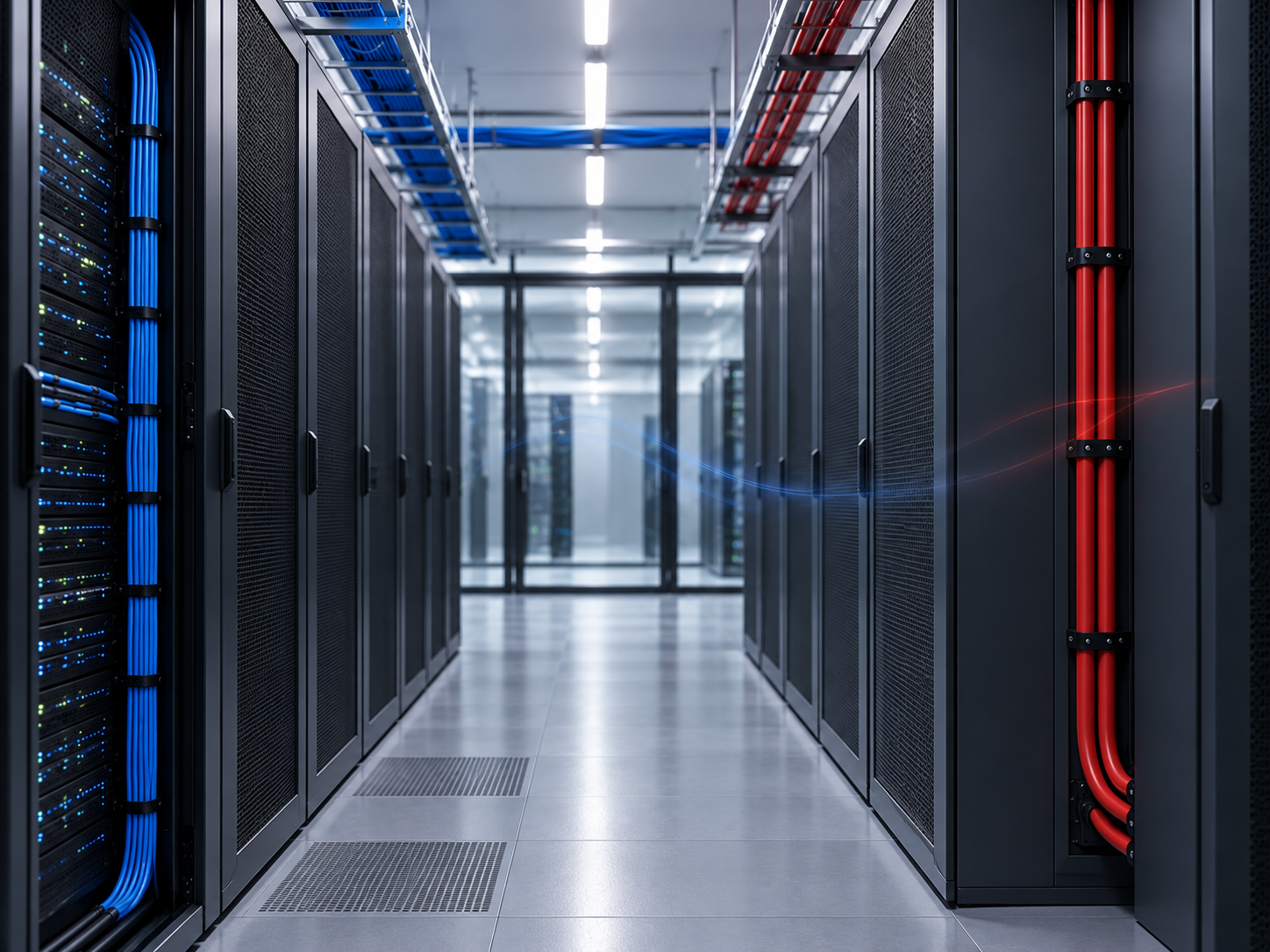
Foil vs. Braided Shielding: Choosing the Right Type
When choosing between foil and braided shielding, the choice comes down to where the cable sits in your data center and what it’s exposed to.
Foil Shielding
Foil is the right call for fixed, high-density backbone infrastructure. It’s the best fit for fixed cable runs in data centers, like overhead trays, under-floor runs, and structured cabling (that won’t need to repeatedly flex). Foil shields are ideal for high-frequency digital signal runs, common in data center backbone and structured cabling.
Braided Shielding
Braided shielding is a good fit for the parts of a data center that change. It’s ideal for patch cables and cables that get moved and reconfigured during rack changes or maintenance.
Combination Foil + Braid
Combination foil and braid is often the right choice for the harshest environments. It’s the best fit for cable runs near PDUs, UPS systems, and cooling VFDs or backbone runs where failure has the highest impact.
To make the determination, consider the following:
- Is the cable fixed or does it flex and move regularly? Foil is better for fixed applications, and braid works for cable that requires more flexibility.
- Is the cable housed near a major EMI source, such as a PDU, VFD-driven cooling, or switching gear? Combination shielding is worth the added cost.
- Is it a high-frequency digital signal run with structured cabling? Foil offers full coverage that matters more here.
- Is it a large-scale installation where cost often scales fast? Foil’s lower cost per foot may drive broad structured cabling decisions. Reserve braided and combo cable for higher-risk zones rather than the whole installation. Mixed-shielding types are often more cost-effective than adopting a singly shielding type facility—wide.
Cable Routing and Separation
Shielding alone doesn’t resolve all EMI noise. In data centers, specifically, rack-level density pushes power and data closer together than almost any other environment. Therefore, layout choices carry significant weight.
Standard separation, 90-degree crossing, and separate-tray practices apply here too, just as they do with any control cable in a high-EMI environment.
Consider implementing vertical separation in rack design. Routing power and data through physically separate vertical channels in rack and cabinet design reduces the incidence of crosstalk at the rack level (where cable density is the highest), which is where data centers diverge the most from typical industrial layouts. Rack density tends to concentrate more cable in less space (compared to a factory floor).
Grounding and Bonding Strategy
A single, well-bounded ground reference point per zone or room reduces the risk of ground loops, especially for large, multi-room facilities.
A shield that’s grounded at multiple points with differing ground potentials can actually introduce more noise on the line, rather than draining it away. Multi-room, multi-floor data centers multiply the number of ground reference points, creating a bigger risk than they would in a single-building industrial facility.
For large-scale builds like data centers, grounding strategy should be part of the initial cable and shielding plan, not an afterthought.
Planning Shielding from the Start
If you’re in the process of planning shielding, there is a certain recommended routine you should follow. Planning shielding for data centers and industrial infrastructure is essential for avoiding issues with EMI down the road.
Step 1: Map noise sources.
Identify where your equipment will sit in your facility relative to your rack and tray layout. Plan a location for PDUs, UPS systems, cooling/VFD equipment, and high-density switching gear first, before finalizing your cable routing plans.
Step 2: Zone the facility by risk.
Zoning by risk means, in practice, treating backbone runs and anything within a few feet of PDUs or VFD-driven cooling as high-risk, and patch cabling in low-traffic aisles as low-risk. Match the shielding type–and the project cost–to the actual risk, per zone.
Step 3: Build separation into the layout.
Separation shouldn’t be an afterthought; it should be built directly into the physical layout. Consider cable tray placement, rack design, and pathway planning to account for power and data separation from the initial facility design. It’s much easier than retrofitting once trays are already installed.
Step 4: Standardize grounding practices.
Bond every zone to a consistent ground reference before installation begins. This is critical in multi-room data centers where inconsistent grounding is the most common source of retrofit pain.
Step 5: Plan for future flexibility.
Data centers often get reconfigured as needs change and activities grow. Plan your cable types (foil vs. braided) around which runs are likely to be most impacted during rack changes and expansions. These areas need more durable braided shielding—even if the initial cost is a little higher.
Step 6: Work with a reliable supplier.
You need a supplier who can advise you on mixed shielding strategies at scale, rather than defaulting to a single cable type for your entire large installation. Large data center projects benefit from a cable strategy tailored zone-by-zone rather than a one-size-fits-all approach.
Noise Control is an Essential Part of Data Center Design
Set up your facility for the best outcomes by considering noise control. The approach in data centers is usually layered—not restricted to a single product selection.
The fundamentals of noise control in data centers are to plan for the right shielding type for each run. Physically separate cables and use smart cable routing and a consistent grounding strategy. Each one should support the others.
Because data centers often combine high noise-source density with highly sensitive infrastructure, it’s important to plan it from the start of a project. This is much easier than trying to retrofit after problems appear. And it will help you save a lot of cost and avoid disruption down the line.
At IEWC, we’re here to help you get your cable design correct. As data centers and technology continue to evolve, we’re here to support you with the right cable design to help you avoid EMI and noise. Request a quote from us today to get assistance with your cable design.
Related Resources
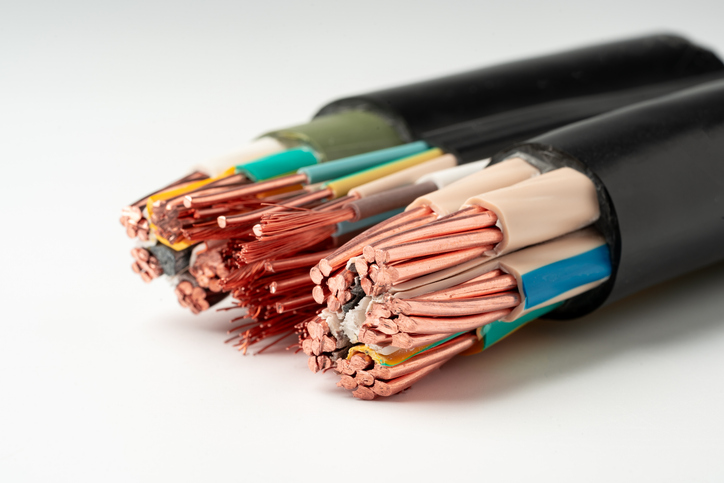
What is a Cable?
Cable, or cabling, consists of the twisting together of two or more insulated conductors.Learn More
High Voltage Wire & Cable Guide
High-voltage or HV wire and cable are necessary for many industrial applications that rely on dependable high-power transmission. Whether you’re looking for the right HV cable for your application or trying to learn more about how HV wire and cable work, we’ll break it down for you.Learn More
How to Choose the Right Wire or Cable
In selecting a wire or cable for an application, several factors should be considered. Learn More