


Data Center Connectivity & Networking Solutions
Data centers are all about connectivity. When you’re transmitting high-speed data and information across cable and wire, you need the best in terms of performance and reliability. Network devices and tools play a crucial role in data center operations.
The data storage management and transmission industry is ever-evolving and changing. At the forefront of technology, you need to stay on top of the latest advancements in fiber optics, wireless solutions, and wireless networking tools to safely and securely protect storage devices and physical servers. The proper network infrastructure supports your data storage systems. Here's what you need to know about best practices and cutting-edge network cabling solutions.
Data Center Cabling & Network Infrastructure
Reliable data center network performance starts with a cabling infrastructure designed to support high bandwidth, dense connections, and future growth. IEWC supplies data and communication cable, networking cable, and fiber optic cable for data center environments where reliable connectivity, signal performance, and scalability are critical.
Copper and fiber cabling can serve different needs across the network. Copper networking cable can support equipment and network connections, while fiber optic cable enables high-speed transmission across longer distances and high-density environments. Selecting the appropriate cable type and construction helps support network performance today while providing flexibility for future capacity demands.
High-Speed Network Solutions
AOCs, or Active Optical Cables, are a go-to modern solution for data transmission across data centers. These specialty cables differ from traditional copper cables because they use fiber optic technology for some of the fastest data transfer rates possible.
Better still, AOCs can deliver data over long distances with minimal signal loss, ensuring a smooth transfer and seamless communication.
Why do many advanced data centers use AOCs? There are several key benefits of choosing AOCs in your data center.
- Unparallelled Performance: AOCs are fast and have a high bandwidth. How fast? They can support data rates up to 400 Gbps—essential for high-level computing, including data-intensive applications.
- Minimized Latency: In high-speed data transmission, time delay over distance is called latency. For AOC, latency is typically very low, thanks to optical transmission (using light to carry data). Data processing and communication can occur in real time.
- Energy Efficiency: AOCs are an energy-efficient choice, especially compared to their copper cable counterparts. Because optical fibers offer lower attenuation (signal loss) over longer distances, less power is required, even at high speeds. AOCs don't typically require signal boosters, and they generate minimal heat. The transceivers that convert optical signals to electrical signals are small and energy efficient with low power consumption. They're also immune to electromagnetic interference, so there's no shielding required.
- Scalable and Flexible for Use: AOCs feature a lightweight, flexible design. You can easily install them; they're easier to manage than other common cable solutions. AOCs offer an ideal option for data centers that may need the option for future scaling and growth.
Overall, AOCs provide a reliable, solid solution for efficient, safe, and optimal data transmission. Thanks to the advanced technology of today’s optoelectronics, AOC cable is an excellent cable and wire option.
Fiber Optic Connectivity
When using AOCs, you may also require specialized fiber optic cables for high-density network environments, known as Reversible LC Uniboot Jumpers, especially for connections with two or only a few fibers. If there’s a need for high-density multi-fiber connections with precise performance and flexible polarity, turn to MTP PRO Elite Connectors. Both fiber optic connectivity components are used within AOCs.
What’s the difference between these two fiber optic connectivity components? When would you need to use them for data center networking?
MTP PRO Elite Connectors
These connectors can connect multiple fibers (for example, 12, 24, or even more) within a single connector. MTP PRO Elite Connectors are often used in high-density data centers and similar applications—when multiple fibers are required for high-speed data.
The benefit of MTP PRO Elite Connectors is that they offer low insertion loss. If the signal integrity is crucial to the application, these connectors are often an ideal choice. They allow for easy signal direction adjustment (polarity) and male/female gender—no tools needed. MTP PRO Elite Connectors are flexible and easy to install and maintain.
Selecting MTP PRO Elite Connectors: Select MTP PRO Elite Connectors when you need compact, space-saving connectors in high-density installations. Choose connectors that offer high-precision alignment to minimize any potential signal loss and optimize long-term performance.
Installing MTP PRO Elite Connectors:
- Prepare the Connectors: Thoroughly clean the cables and the connectors before installing.
- Align the Connectors: Carefully align the connectors for insertion into the MTP adapters.
- Manage Polarity: Use the polarity management features to adjust for installation.
Reversible LC Uniboot Jumpers
These are single or dual-fiber jumpers that use small LC (Lucent Connector) connectors. Generally, these connectors are used for a single pair of fibers (to receive and transmit) within a compact cable. The jumpers are ideally suited for high-density, simple applications where space is tight.
The polarity management allows users to flip the connector housing and reverse the polarity (again, no tools needed) for very convenient adjustments. The Uniboot design consists of two fibers housed in one cable for a space-saving and clutter-minimizing design.
Selecting Reversible LC Uniboot Jumpers: These specialized jumpers help simplify the task of cable management in data centers. When selecting them, it’s important to make sure they’re compatible with your existing fiber optics and infrastructure. Choose Uniboot Jumpers with high return loss and low insertion loss to ensure you’re getting optimal signal integrity.
It’s also important to consider the environment of your data center. Choose jumpers and materials that can withstand any conditions and environmental demands (such as temperature).
Installing Reversible LC Uniboot Jumpers:
- Prepare the Components: Measure out the proper cable length and clean all the components to ensure they're dust and debris-free.
- Insert the Connectors: Insert the LC connectors in the corresponding ports, checking to make sure the fit is secure.
- Adjust Polarity: Reverse the jumper’s polarity by flipping the connector body if needed. The reversibility helps make changes and maintenance simple.
Cabling Infrastructure for Wired & Wireless Data Center Networks
Integrating wireless solutions within your cabling infrastructure offers several benefits, including improved flexibility and coverage. Wired and wireless solutions can help you leverage the strength of both tools for comprehensive coverage and optimal signal strength within your data center.
It’s important to take a strategic approach when adding wireless networking to your technology.
- Start with Mapping: Networking requires a solid plan and design. Create a coverage map by assessing the layout of the data center. Pinpoint areas that will require wireless coverage and areas where wired coverage would be more appropriate.
- Check Interference: Stay mindful of potential sources of interference. Be sure that your placement and coverage minimize the impact of interference on the wireless signals within your data center.
- Plot Your Implementation: How will you combine the wireless and wired connections to create a hybrid network that takes advantage of the benefits of both types of tech? Consider where you’ll structure the access points for optimal signal strength.
Wireless networking can provide added flexibility as data center requirements change, particularly when equipment is reconfigured or network coverage needs to expand. However, wireless connectivity still depends on a reliable wired infrastructure to connect access points, network equipment, and critical systems.
A combination of wired and wireless connectivity can help data centers balance flexibility with the performance and reliability required for critical applications. Selecting the appropriate networking and fiber optic cabling provides the physical infrastructure needed to support both current network requirements and future expansion.
Support for the Modern Data Center Network
Modern data center networks require reliable cabling and connectivity infrastructure that can support increasing bandwidth, high-density connections, and future expansion. Selecting the appropriate networking cable, fiber optic cable, and connectivity components helps maintain signal performance and gives facilities the flexibility to scale as network demands evolve.
IEWC supports data center infrastructure with wire, cable, connectivity products, and technical expertise for demanding network applications. Whether you are designing new infrastructure or expanding an existing system, our team can help identify solutions that align with your performance, installation, and scalability requirements.
Related Resources

Data Center Solutions
Explore IEWC wire, cable and connectivity solutions for power, cooling and high-performance data center infrastructure.Explore Solutions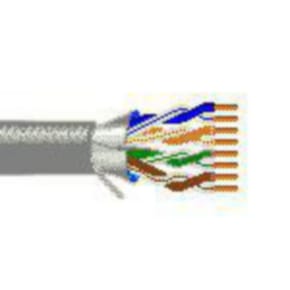
Data & Communication Wire and Cable
Browse communication cable solutions designed to transmit data, voice and signals across demanding network environments.Browse Products
Networking Cable
Explore networking cable options for reliable data and communications transmission across connected systems.Browse Networking Cable