Selecting Cable for Extreme Temperature & Outdoor Industrial Applications
In extreme temperatures, selecting the right cable for the application is crucial. For outdoor industrial installations like a wind farm, a water treatment plant, or a mining operation, the temperature range can span 100+ degrees between seasonal extremes.
Get that selection wrong, and you may not notice the error until 18 months down the road when insulation cracks, conductors fail, or you have a sudden (expensive) shutdown. IEWC is here to make sure that doesn’t happen. We want you to get your cable selection right the first time.
Key Takeaways
- Temperature rating indicates the conductor temp, not the ambient temperature; this is one of the most commonly misunderstood cable specs in the industry.
- Thermoset always beats thermoplastic for high-heat and wide-swing applications.
- UV resistance must be included in the listing. Don’t just rely on cable color.
- Match cable type to the installation method and the environment (not just one or the other).
- Choosing a cable just because it worked for the last application is how failures happen.
- At IEWC, we bring application expertise and a broad product selection to help you get it right the first time.
Why Extreme Environment Cable Selection Is Different
The problem is that most cable selection guidance is geared toward standard commercial and light industrial applications. It doesn’t take into consideration the compounding cable stressors of outdoor industrial environments. UV exposure, freeze-thaw cycling, chemical exposure, and wide thermal swings take their toll.
It’s essential to understand the rationale behind the cable temperature ratings. There are specific materials that are made for the most extreme conditions, and you need guidance through a cable selection process that holds up in the field.
Standard cable selection is a relatively straightforward process: match the voltage rating, confirm the ampacity, check the listings, done. But adding in an extreme environment layers in additional stressors that can build off each other, and the standard specs don’t quite capture them. 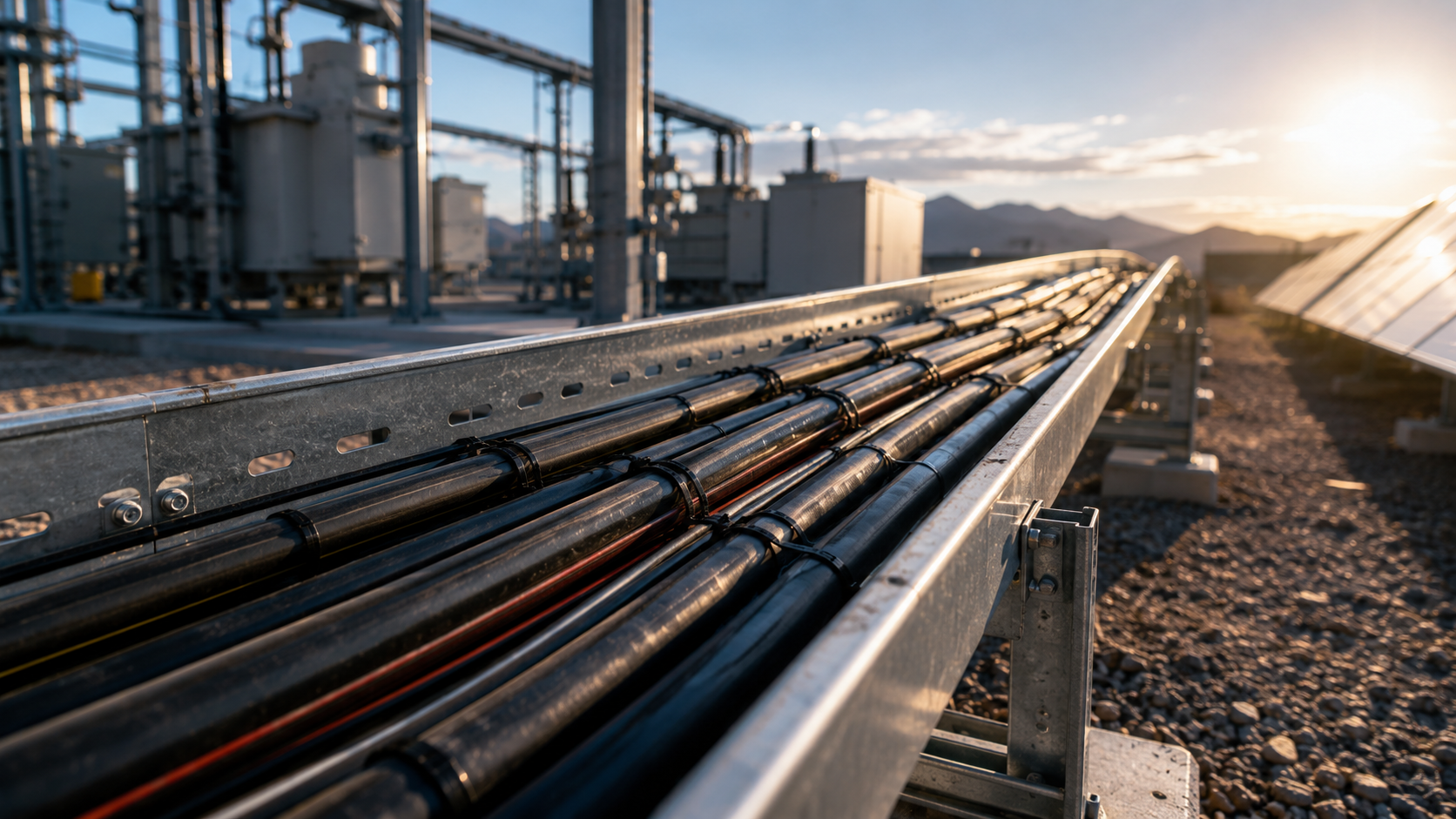
The stress factors in outdoor industrial environments include:
- Wide ambient temperature swings, both daily and seasonal.
- UV and ozone exposure that can degrade jacket materials over time.
- Moisture ingresses from rain, condensation, direct burial, and submersion.
- Freeze/thaw cycling that can put stress on cable insulation and impact the jacket flexibility.
- Mechanical stress from wind, ice, vibration, and cable tray movement.
- Chemical exposure, such as oil, solvents, fuel, or cleaning agents.
- Corrosive atmospheres, like offshore salt air and petrochemical environments.
Any one of these stressors can quickly shorten cable life. When you combine them, they accelerate failure in ways that can be difficult to predict. Most cable for industrial applications must be specified for the full stack of threats. The goal of your cable selection isn’t simply to meet code, but to select cable that performs reliably for its full expected service life and is made for the actual conditions it will face.
Applying Temperature Ratings to Cable Selection
Every cable has a temperature rating. Unfortunately, many people misunderstand and misapply that rating. It’s one of the most common specification errors in the industry.
Temperature rating (e.g., 90°C, 75°C, 60°C) refers to the maximum allowable conductor temperature. It doesn’t refer to the ambient air temperature that surrounds the cable. The conductor temperature must include the ambient temperature along with the heat generated by current flow.
A cable that’s rated 90°C in a 40°C ambient environment has far less tolerance leeway than the same cable in a 20°C environment.
In NEC Article 310, we get the ampacity tables based on specific ambient temperature assumptions, which are typically 30°C for most tables. But should the actual ambient temperature exceed the table assumption, then the cable must be derated (in other words, the allowable current-carrying capacity gets reduced).
Failure to derate your cable selection in high-ambient environments leads to conductor temperatures that can exceed the insulation’s rating. When this happens, we see accelerated degradation, leading to eventual failure. Derating factors can be found in NEC Table 310.15(B)(1). This is a critical reference for project engineers when selecting for an installation where the ambient temperature may regularly exceed 30°C.
Low temperature ratings are the other side of the problem. Most cables have a minimum installation temperature and a maximum operating temperature. Installing or pulling cable below the rated minimum temperature can also cause insulation and jacket cracking. When the protection becomes compromised and brittle, you can’t always see it with the naked eye, but long-term performance is still heavily impacted.
Cables rated for cold weather and with an arctic grade indicate that those protective materials are made to stay flexible, even at sub-zero temperatures. Some projects in hot or cold areas see seasonal extremes. For these cables, both ends of the temperature range (high and low) must be part of the consideration. There are several standards that can help you as a reference point.
- NEC Article 310: Conductor ampacity and temperature correction
- ICEA S-95-658: Outdoor power cable standards.
- IEC 60502: International power cable standards for industrial applications.
It’s crucial that you check the standards before you proceed with your cable selection.
Which Cable Insulation and Jacket Materials Perform in Extreme Conditions?
The difference between a cable that holds up for 20 years in a harsh outdoor environment and one that fails in three years or less comes down to insulation and jacket material.
Insulation Materials
You have several options for insulation materials, but selection matters. Here’s how they perform and under what conditions.
XLPE (Cross-Linked Polyethylene) is the workhorse of high-performance industrial cable. The material is thermoset—it’s chemically cross-linked—so it won’t soften at high temperatures like thermoplastic materials can. It’s rated to 90°C (wet or dry) and offers excellent moisture resistance and good chemical resistance, making it the standard choice for outdoor power cables in the most demanding environments.
EPR (Ethylene Propylene Rubber) is another cable insulation option that offers flexibility, even at low temperatures. This material has excellent electrical properties along with good ozone and UV resistance. This type of cable insulation is often specified for mining, offshore, and cold storage applications. It’s a good selection for applications where flexibility matters as much as thermal performance.
PVC is common and typically the most cost-effective insulation choice, but the choice comes with limitations. It can become brittle in cold temperatures and soften in high heat. PVC isn’t the ideal cable insulation choice for applications facing a wide temperature swing.
Silicone has an exceptional temperature range, often -60°C to 180°C, or beyond. However, the drawback of silicone insulation is the high cost and lower mechanical strength, but it’s the go-to option for high-heat applications.
Jacket Materials
There are also options for jacket materials that can make or break cable performance.
CPE (Chlorinated Polyethylene) has excellent oil, chemical, and UV resistance, which is why it is so commonly used in industrial and mining applications.
CSPE (Chlorosulfonated Polyethylene / Hypalon) offers superior UV, ozone, and weather resistance. It’s often specified for offshore applications and situations with outdoor exposure.
TPE/TPR offers good cold-weather flexibility and oil resistance, making it the preferred choice for portable cord (and applications that demand repeated flexing).
PVC is adequate for most moderate environments. In situations with prolonged outdoor exposure, it will require UV stabilization additives.
Thermoset vs. Thermoplastic: An Important Distinction
What’s the difference between thermoplastic and thermoset? Thermoplastic materials soften when they are heated. In high ambient temperatures and overload conditions, the insulation can become deformed, compromising cable performance.
Thermoset, on the other hand, uses materials that are chemically cross-linked, so they maintain their structure even under hot temperatures. Thermoset is the better choice for high-temperature and wide swing applications.
Sun-Resistant and UV-Stabilized Jackets
Any cable that is installed in direct sunlight will need a UV-resistant jacket. This applies to most outdoor cables. Look for sunlight-resistant or sun-resistant in the cable listing. Don’t make the mistake of just looking at the color. Not all black jackets are UV-stabilized. The listing details matter.
Cable Types Rated for Outdoor Industrial Applications
Beyond the jacket and insulation, it’s also essential to match the cable type to the installation method and the environment.
Tray Cable (TC-ER)
Tray cable is for use in cable trays in outdoor industrial environments. TC-ER (the ER stands for “exposed run”) allows for installation without a conduit in some applications. Your tray cable must be rated for the specific environment, such as wet locations, direct sunlight, or any other environmental factors the cable may face. TC-ER is most commonly used in the oil and gas industries, with petrochemicals, and for utility applications.
Type W and G Cable
Type W and Type G cables are heavy-duty portable power cable options, designed for tough handling, outdoor exposure, and wide temperature ranges. These are the go-to cables for mining, construction, and temporary power applications. The cable is found in Extra Hard Service (W) and Generator Cable (G) configurations.
Direct Burial Cable
For underground applications, direct burial cable is essential. It’s made to hold up to moisture, freeze-thaw pressure, and different soil chemistry. Direct burial cable often features XLPE insulation and a heavy polyethylene jacket to protect the cable underground. Armored cable options are available in steel wire or interlocked armor; these provide mechanical protection against dig-in and rodent damage.
Armored Cable (MC, AC, SWA)
Metal-clad and steel wire armor offer mechanical protection in harsh environments. It’s important to use armored cable for installations that are subject to impact, rodent exposure, and unstable soil conditions.
Matching Cable to the Application
Different outdoor industrial environments call for different cable selections with appropriate stressor profiles. A cable that’s right for a wind farm isn’t necessarily the best option for an offshore platform or a cold storage facility.
Oil and Gas Field Wiring
For the oil and gas industry, cable must be resistant to hydrocarbon and chemical exposure. Oil-resistant jackets like CPE or CSPE are the best option for these applications. Depending on the application, hazardous location listings (Class I, Division 1 or 2) may also be required. TC-ER and Type W are common cable selections for most applications, although armored cable is the preferred choice for mechanical protection in field installations.
Wind and Solar Farms
In a wind or solar farm, UV exposure is constant and severe. A sun-resistant jacket rating is a must. Wide temperature swings are very common in these applications, especially in desert and high-altitude installations. Direct burial runs call for moisture and freeze/thaw-resistant insulation systems. Solar-specific cable (USE-2/RHW-2) is the best choice for PV applications.
Mining and Quarry Operations
In mining and quarry work, mechanical abuse, moisture, and chemical exposure are all simultaneous threats. For the mining industry, Type W and G cable is used for portable equipment. Fixed runs need armored TC. Cold temperature flexibility is also an important consideration for northern and high-altitude mining operations.
Offshore Platforms
On the coast, the constant exposure to salt air leads to corrosion quickly. To protect cable, you need CSPE or equivalent jacket materials. Flame resistance may also be required. Any time your operation is on the water, moisture resistance is non-negotiable. The environment is essentially continuously wet.
Cold Storage and Arctic Installations
Icy temps present their own hazards to cable. For cold storage and installations that must withstand freezing environments, the minimum installation temperature is the governing spec to consider. EPR insulation and TPE jackets offer cold flexibility. Arctic-grade cable is rated to -40°C or -50°C installation temperature, making it ideal for frigid weather.
Water Treatment Plants
Water treatment and sewerage present an additional challenge. Not only are wet ratings needed throughout your operation, but direct burial is common and should be considered as well. The chemical exposure of cable is high, with chlorine and other treatment compounds, so jacket selection must protect the cable. For some applications, corrosion-resistant conduit systems and armored cable are the appropriate choice.
Building a Cable Selection Process for Extreme Environment Projects
When selecting cable for an industrial project, it can be tempting to go with a product because it worked for the last job. But ad hoc cable selection is how specification errors happen. So, it’s important to follow a set process to ensure you get exactly what you need. A structured cable selection process protects your project and creates a clear, defensible record for inspection and maintenance.
- Start by defining the full environmental profile, looking at the range of factors from maximum and minimum ambient temperature (for both operating and installation) to UV and sunlight exposure. Moisture exposure and chemical and oil exposure are also crucial considerations. Also, look at the expected mechanical stress for cable tray, direct burial, and portable cable, as well as fixed installations. For cold temperatures, consider the freeze-thaw cycling. If applicable, hazardous location classification is also essential.
- Establish the voltage and ampacity requirements for your cable before you select it. Confirm that the voltage rating has a sufficient safety margin. Don’t forget to apply the ambient temperature derating factors (per NEC 310) and to account for conduit fill, because multiple conductors can derate each other when in close proximity.
- Select the necessary insulation and jacket for the stressor stack. Don’t make the mistake of optimizing for one specific stressor. Consider the full combination of environmental needs. When in doubt, specify up. The cost differential from adequate to excellent is quite small compared to the cost of replacement.
- Confirm the listings and standards compliance of your cable selection. Does it carry the required UL listings for the installation method? Confirm the full range of factors such as UV and sun-resistance, direct burial or wet location ratings, as applicable to your installation. If required, also check the hazardous location rating.
- Document the cable specifications and include your rationale for making that choice. Your record should include the cable’s temperature profile, derating calculations, and standards referenced during the selection process. Documentation helps you create a clear, defensible record for inspections and sets a baseline for future and similar projects.
- Work with a distributor, like IEWC, who knows the application. A cable distributor needs application expertise so they can flag specification gaps long before they become field problems and failures. A good cable distributor should source cable that meets the full range of your specs, not just the most important ratings.
Work in extreme environments is tough, so your cable needs to be tougher. Cable selection in extreme environments doesn’t leave room for mistakes. Cable is one area where you don’t want to cut any corners or rely on habit. The compounding stressors of outdoor industrial installations stack up fast: heat, cold, UV, moisture, chemicals, and mechanical stress. You must have a deliberate and systematic approach to the specification.
Getting your cable selection right the first time is almost always cheaper than trying to fix it if you get it wrong. A failed cable in an operational windfarm, offshore platform, or mining operation doesn’t cost the cable—it can lead to extensive costs when you consider downtime.
At IEWC, we have the experience to work with engineers, contractors, and procurement teams to help you get your cable selection exactly right. We have applicational expertise and a broad product portfolio made to help you get what you need for the most demanding industrial environments.
Have questions about your cable selection? Talk to an IEWC application specialist about your next extreme environment project before you lock in the specs. We’re here to help you get it right the first time.
Related Resources
What is a Cable?
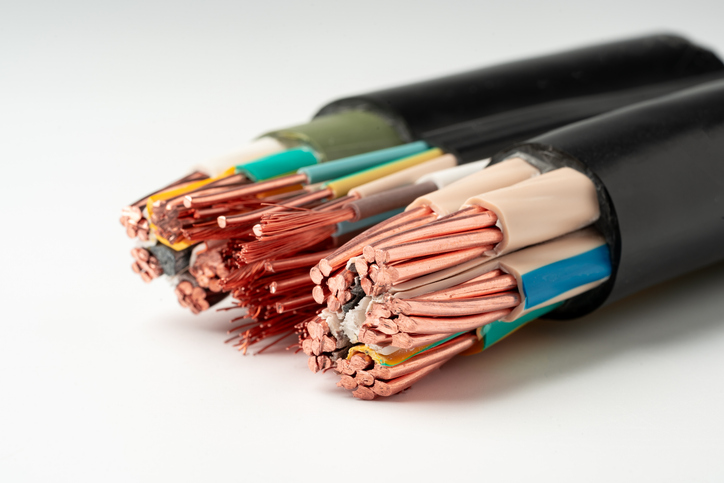
Cable, or cabling, consists of the twisting together of two or more insulated conductors.Learn More
High Voltage Wire & Cable Guide
High-voltage or HV wire and cable are necessary for many industrial applications that rely on dependable high-power transmission. Whether you’re looking for the right HV cable for your application or trying to learn more about how HV wire and cable work, we’ll break it down for you.Learn More
How to Choose the Right Wire or Cable
In selecting a wire or cable for an application, several factors should be considered. Learn More